Twitter Delicious Facebook Digg Stumbleupon Favorites More

Showing posts with label Baja California Sur. Show all posts

22 April 2015

We are sharing this Blogpost from our friends Cabo Ground Services. Source: http://cabogroundservices.blogspot.mx/2015/04/donate-toys-for-los-cabos-less.html#.VTf8I5NLDYg

Dear customers,
Hope you are doing great!

Hurricane Odile left many families hurting in their soul and minds but most importantly damaged their homes and took away their hope!  Nowadays Over 10 hotels remain closed  in the San Jose del Cabo area due to the re construction.
Due to this and because Children’s Day in Mexico is on April 30th, we wanted to ask you a personal favor, we are starting to collect toys for the Los Cabos less fortunate kids.

If you could bring some in your upcoming trip, it will be fantastic. It doesn't have to be new or big or expensive, just in good conditions and that it doesn’t use batteries even a hot wheels little car or a Barbie will make them happy!
If you have friends coming down please let them know as well, and give them the opportunity to help.

Another good option is to buy them when you go to Walmart or mega on the way to your hotel, just let the driver know about it and they will definitely stop for you!
You can also donate via our PayPal account ubielvilla@yahoo.com and we’ll buy them on your behalf!


These are kids and families t
hat will return a warm genuine smile. We will be taking pictures of their actual living conditions and also of the delivery of the toys and will be posting them in our Facebook page soon.

We totally understand if you can't but if you can spread the word, we'd really appreciate it!

If you need more information regarding the donation, please feel free to email us to info@cabogroundservices.com

Thank you for your time, we truly appreciate it!

Have a wonderful day!
Cabo Ground Services Team.

05 May 2013

Florida couple gets rare encounter with killer whales in La Paz, B.C.S.

Today it's a beautiful Sunday in Cabo!
I woke up this morning and opened the window to enjoy the morning breeze. I realized there's no wind blowing like yesterday, not sure if it will be windy later on the day.

I browsed for Baja California news in my cellphone, and I found a video totally worth sharing about a great killer whales show near La Paz, B.C.S.

Reblogged article:

Florida couple gets rare encounter with killer whales in La Paz, Baja California Sur.

The magnificence of nature was on full display for a Florida couple celebrating their 20th wedding anniversary in La Paz, Mexico.

Florida divers Rich and Laura Howard got the experience of a lifetime as a pod of 17-20 Orcas/Killer Whales flipped and played alongside the couple’s boat for nearly one hour off the coast of La Paz
The Howard’s learned locals had seen the whales occasionally over the past decade, but no one had ever witnessed this behavior by the pod before.
According to the Howard’s website, “Oceans of Images:”
Killer Whales (Orcas) in this area are VERY RARE. Our diver master stated in ten years he has seen them only 3 times and they have NEVER had a close encounter like this. Luck plays a huge part sometimes in witnessing the awesome nature of God’s creatures. We were very lucky.
Indeed they were, and we thank them for sharing this incredible video with us!
Watch the Howard’s amazing video here:


Ads: Need a Mariachi Band for your wedding or any other event in Cabo?
Contact us: http://bit.ly/gavilancillo or send an email to: caboamazing@gmail.com

02 April 2013

Experts warn Mexico of high sea turtle mortality rates in Baja California Sur


Mexico City, Mar 13 (EFE).- International experts have warned President Enrique Peña Nieto that Mexico is experiencing high mortality rates among sea turtles off the coast of the northwestern state of Baja California Sur, the Mexican Center for Environmental Law, or CEMDA, said.

The Marine Turtle Specialist Group, or MTSG, sent a letter to Peña Nieto advising him that Baja California Sur has some of the highest sea turtle death rates in the world, CEMDA said in a statement.
The high mortality rates have been confirmed by both scientists and Mexican government agencies, CEMDA said.

More than 2,000 sea turtles died in 2012, an increase of 600 percent from the already high levels registered in the area over the past few years, CEMDA said.

MTSG experts conducted a study in 2011 to try to determine the state of sea turtles around the world and identified North Pacific turtles as among the most threatened.

The situation has worsened due to high accidental kills associated with small-scale fishing in the Gulf of Ulloa, CEMDA said.

The MTSG belongs to the survival commission of the International Union for Conservation of Nature, or IUCN, which was formed by more than 7,500 scientists from around the world and seeks to protect current global biodiversity levels.


Don't forget that CABO AMAZING! Has the most fun activities and transportation services for you and your family in Cabo! Send an email to caboamazing@gmail.com to request a service.

26 March 2013

If you ever wondered what to do in Baja California Sur


Baja California Sur Adventure Tourism 

24 April 2012

OUCH!: Desert Plants of Baja California Sur

by EXPEDITIONJCS on APRIL 20, 2012 · LEAVE A COMMENT

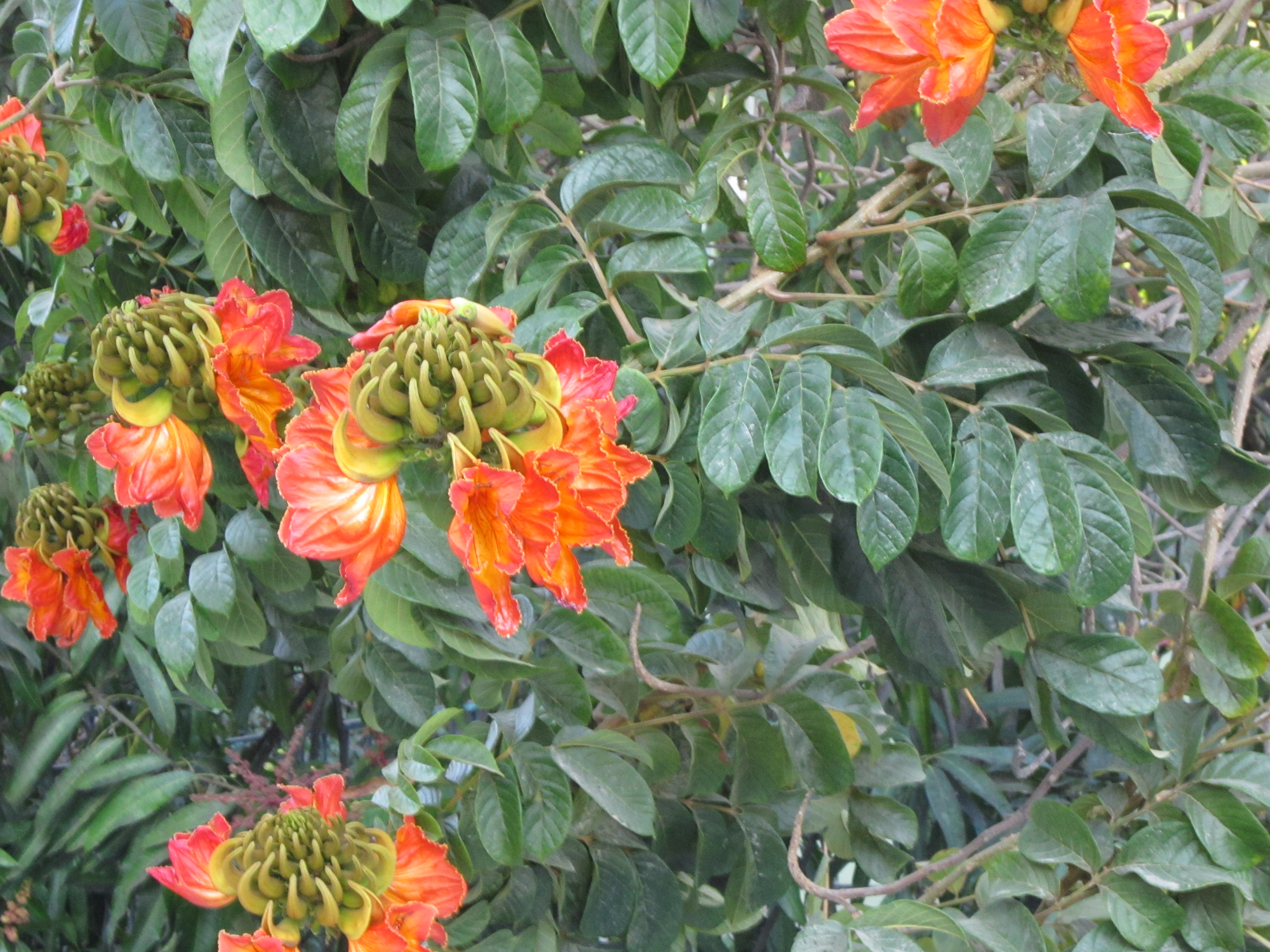
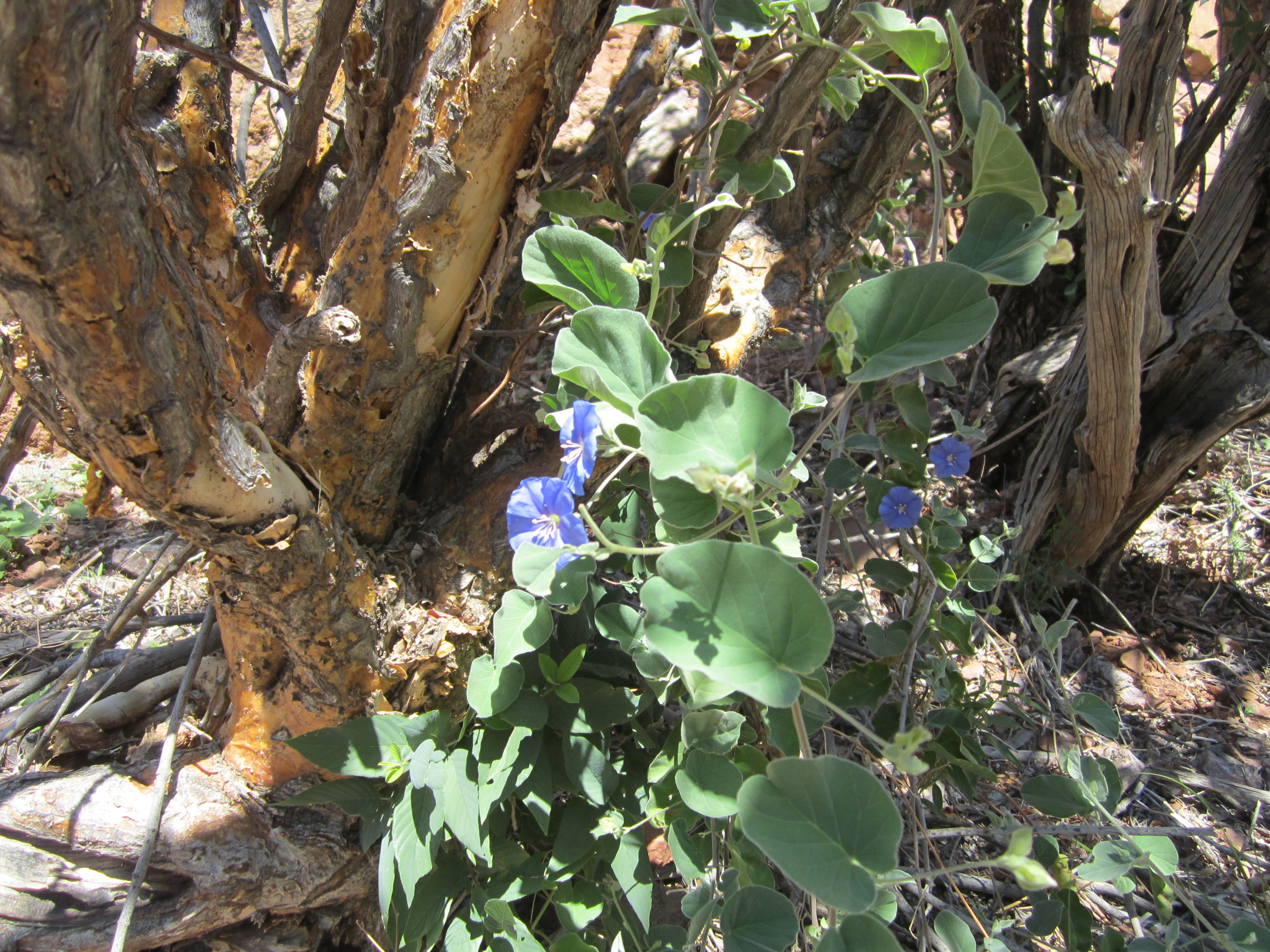
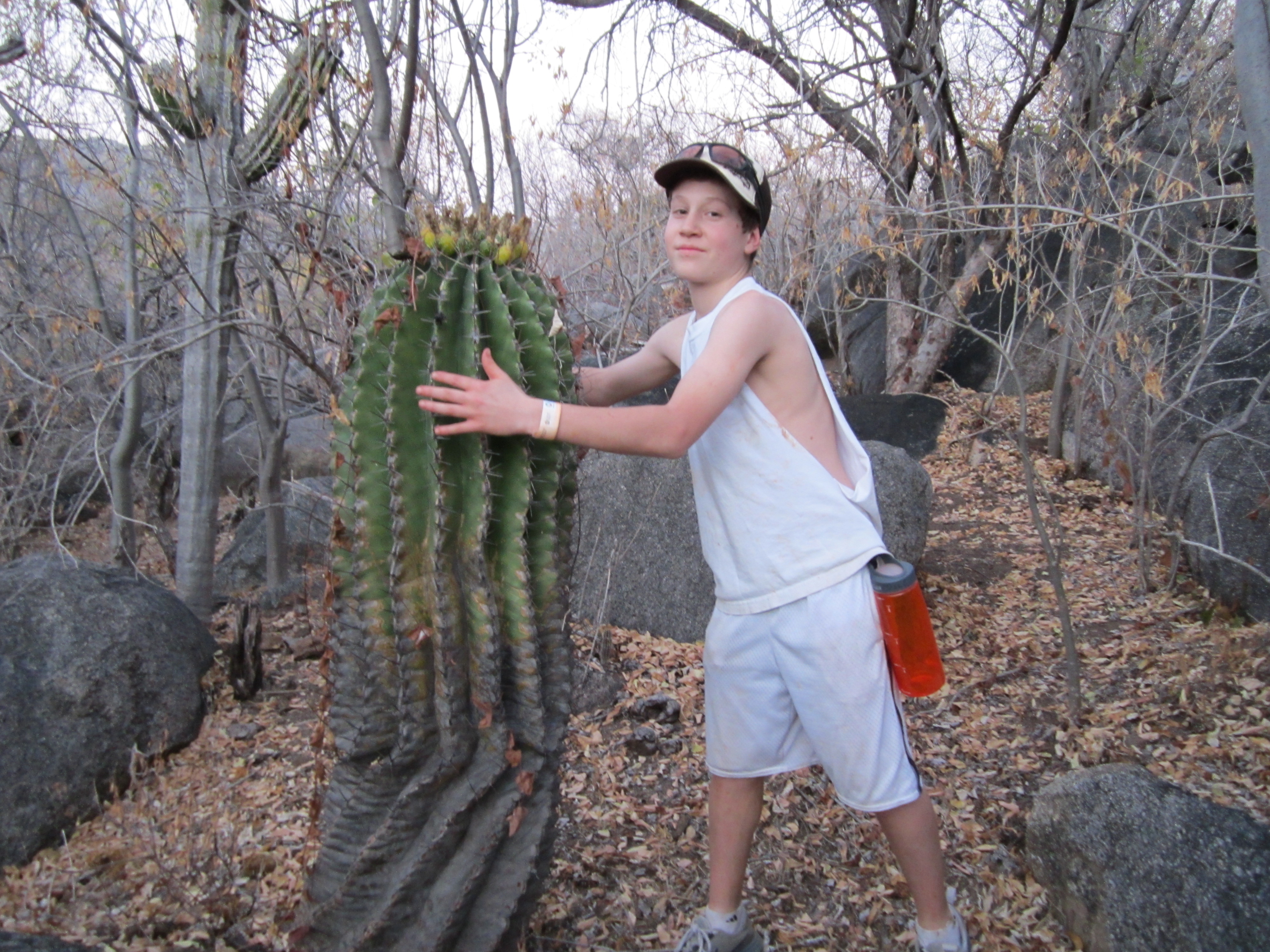
While a desert at first glance seems a harsh and desolate place I quickly realized that it was vibrant with life. When we were in wilderness areas it was just an expanse of bushes and cacti in all directions with trees only occurring near water sources. To my surprise, I found out that the dry sandy soil there has a very good nutrient mix for the growth of plants. However this amount of plant life proved to be a problem, as it seemed at least half of the desert plants had spines, spikes, blades, or other ways of inflicting pain and wounds on me and my classmates.

Dull green colors with sharp reactions
While the immediately obvious dangers were the cacti, many bushes also had such spikes. An early problem was a rather annoying class of plant that had blade-like leaves. These slashed light wounds across many of us, one cutting a nasty wound in Joe’s hand. This was mostly an early trip problem though. Another offender was a small green plant called “Good Woman”, which had sharp leaves that, while not doing significant damage to us most of the time, were painful and became a problem in the area near Edgardo’s (our guide) home. They were, thankfully, restricted mainly to areas near water. The plant was named “Good Woman” because it can be used to aid childbirth. The joke is “If this is the good woman, I’d hate to see the bad one.”
There were other plants as well, including many native cures. I experienced one such cure, a flower I was told would relieve sore throat and coughing. What I was not told was that the thing had an extremely powerful aftertaste. It was a sensation I cannot adequately describe. While I just fell into the experience of the blast, the one other person who also had one, immediately started chugging water in an attempt to wash it down. I might have been wiser to do so myself but somehow despite how uncomfortable it was I had a feeling that I should savor it. This was, from what I could tell, nothing compared to another incident.
While we were eating lunch at the home of a woman we had just helped construct a garden for, we noticed a number of small red peppers. Most of the students tried one and were inflicted with such suffering that they shoved ice cubes in their mouths in an attempt to make it go away. Witnessing this, I decided that I had no reason to inflict needless suffering on myself and chose not to try one.
Though the desert fauna was much less central to our desert experience than the flora, there were reminders that it was there. Most were minor, like a small animal off the side of the road or a lizard in our sink. Most notable weren’t the native fauna, but those introduced by humans. Cows so thin they were almost skeletal, obviously not equipped for the desert. Dogs that were a little thin, but still friendly as ever.
 One of the more striking experiences was, at one of our meals in a rural area, a pack of cats materializing out of the brush. Cats are naturally carnivorous, so it showed how desperate they were how they were willing to eat bread scraps. On the way out of the area we ran one over, but it popped back up again and ran like a polar bear was chasing it.

Joe and his new friend
A desert is a prime example of the adaptability of life. Plants and animals not only manage to survive there but thrive, and the difficulties of desert life have only made them tougher. It is difficult for our less hardened life to survive there, but it too can find a place. The trip would not have been the same without the animals we encountered, and the difficulties presented by the plants only made the destinations of our hikes better, as we had worked hard to reach them.
-Adam Braude, Age 14


Don't forget that CABO AMAZING! Has the most fun activities and transportation services for you and your family in Cabo! Send an email to caboamazing@gmail.com to request a service.

27 January 2012

Let’s Go Ride Baja with Malcolm Smith

Don't forget that CABO AMAZING! Has the most fun activities and transportation services for you and your family in Cabo! Send an email to caboamazing@gmail.com to request a service.


See The Video:


Ride BAJA with Malcolm and friends, March 2012. This annual charity event raises the funding for El Oasis Orphanage in Valle Trinidad, and gives riders a chance to conquer Baja with a select group of 50 men.
The event is a GPS guided event (No previous GPS experience necessary). Using the provided GPS you guide your motorcycle through the epic legendary rugged land that is Baja. Riders group up with other men of similar abilities and ride in small groups. Throughout each day you will encounter several guides on the trail and a sweep rider following the course. The course is a mix of the legendary Baja 1000 courses, private single tracks, dirt roads and some pavement.

Malcolm Smith Adventures provides all your support, luggage transport, remote fuel stops, trail assistance and sweep and night stops are the finest hotels in Baja. At trails end, a giant two night fiesta in Cabo as our semi trucks haul the bikes back 27 hours to the start line. Wives and guests are invited on a special 4 night package to join you in Cabo.

Ride with the LEGEND AND HERO, Malcolm Smith.

More Information: http://events.r20.constantcontact.com/register/event?oeidk=a07e55kz6do2fe50260&llr=7jy4m6cab

Source: http://blogs.motorcyclistonline.com/lets-ride-baja-malcolm-smith-2461.html

Tyson Poor conquers the 2012 La Ventana Classic

Don't forget that CABO AMAZING! Has the most fun activities and transportation services for you and your family in Cabo! Send an email to caboamazing@gmail.com to request a service.


Tyson Poor has conquered the 2012 La Ventana Classic 11-Mile Island Crossing, held at Baja California Sur, in Mexico.

The event represents the spirit of wind riding. Great weather conditions, superb windsurfing and kiteboarding competitions, paddling clinics, live auctions, parties and fund raising efforts.

Again, the old and healthy rivalry of windsurfers and kitesurfers was here to stay. The year 2012 has seen a couple of windsurfing victories and the 2012 La Ventana Classic drove in the same way.

Tyson Poor secured the title for his sailing class, in the long distance race, leaving two kiteboarders in the silver and bronze medals: Johnny Heineken and Bryan Lake.
Steve Bodner took the course racing in the windsurf division, while Adam Koch won in the kiteboarding category. In the Big Air/Old School showdown, Brandon Bowe beated experienced riders Damien LeRoy and Julian Kerner.

In the end, there are more $23,500 US to spend in La Ventana and El Sargento community projects. The 2013 La Ventana Classic is right around the corner.

Results of the 2012 La Ventana Classic:
11-Mile Island Crossing

Fastest Crossing
1. Tyson Poor (windsurfer)
2. Johnny Heineken (kiteboarder)
3. Bryan Lake (kiteboarder)

Men Kiteboarding
1. Johnny Heineken
2. Bryan Lake
3. Damien LeRoy

Women Kiteboarding
1. Erika Heineken
2. Marie LeClerc
3. Rachel Callahan
Course Racing
Windsurf
1. Steve Bodner
2. Lyn Preutt

Men Kite
1. Adam Koch
2. Johnny Heineken
3. Bryan Lake

Women Kite
1. Erika Heineken
2. Alexis Aguera
3. Colleen Carroll

Big Air/Old School

Men
1. Brandon Bowe
2. Damien LeRoy
3. Julian Kerner

Women
1. Michelle Gabriel
2. Brittany Todd
3. Kris Kinn

19 November 2011

The Season of the Gray Whale

Whale Watching Tours in Cabo San Lucas: Cabo Escape | Cabo Legend Tours

The Season of the Gray Whale

One of the more remarkable migrations among marine animals occurs each year right outside the Golden Gate.

In late fall, the California gray whales passes south along our shoreline to the warm waters of the Sea of Cortez and the lagoons of Baja California, Mexico. Leaving the rich feeding grounds of the Bering and Chukchi seas off Alaska, these baleen whales travel along the coastal margins traveling a distance of approximately 6000 miles to breed and give birth. This round trip of 10,000 to 14,000 miles is considered among the longest annual migration of any mammal. Frequently these whales can be seen from our shoreline with great viewing site off the Point Reyes National Seashore or off Point Montara to the south. The whale is considered a conservation success story because protections instituted in the early 1930's have allowed populations to rebound from possibly less than 1000 individuals.

Leading my last wildlife trip of the year with SF Bay Whale watching last weekend, we spotted a resident gray whale at the southeast Farallon Island, likely an individual among the two hundred or so considered to be resident. These whales are generally juveniles who do not participate in the migration but feed along the shores of California. As opportunistic feeders, the whales scrape along the bottom filtering out crustaceans with their baleen, or scoops krill from the water or even in kelp beds.

As an undergraduate I studied these whales in Laguna Ojo de Liebre (also known as Scammon’s Lagoon after the infamous whaler of the name) and Guerrero Negro in the Baja Peninsula. Camping along the margins of an estuary, we counted and identified whales, monitored movements and even dived the lagoon to observe behavior and collect bottom samples. At that time it was believed that the whales did not feed during their visit to Baja, or along the way, but relied instead on the fat stored from the rich feeding grounds to the north.

Our observations of feeding whales, the verification of food in the lagoons, and other observations of feeding along the coast helped disprove that theory. Gray whales are opportunists, and this opportunism of feeding, migrations and non-migration may have helped the survival of the species. Back in the day before tighter restrictions were in place in Mexico, we commonly paddled our longboards across the lagoon to the sand dunes separating the calm waters from the sea. Juvenile whales would bump our boards and adults 40 feet long passed a hand's breadth beneath us — with a grapefruit-sized eye staring back at us. Friendly whales frequently rubbed their parasites alongside our inflatable dinghy, as whales spy-hopped, breached and spouted all around us as we collected our data.

I recall surfing the lagoon mouth as whales passed through the narrow channel nearby, and slid on breaking waves from the shallow sand into the deeper channel, gliding over the whales' backs. Large tuna and sharks also shared the waters and it was not unusual to see a beached baby whale with the large serrated gnaw marks of white sharks.

Diving in the lagoon to collect bottom samples, whales would appear and disappear like grey ghosts or slide along creating a muck cloud. In addition to feeding on planktonic shrimp, gray whales bottom feed, skidding along the soft sediment, collecting mouthfuls of muck and loads of crabs, shrimps, isopods and other crustaceans and invertebrates.

Like people, these whales are right or left sided, and older whales actually become blind in one eye from the continued contact with sediments.

At the time around the American Civil War, the gray whale population was dramatically reduced by hunting in the lagoons. Especially vulnerable because of their coastal navigation, and exposure in what became called the “whaling lagoons,” the eastern Pacific gray whale population dwindled. Over 150 years ago, whalers like Charles Scammon slaughtered whales with abandon like fish in a barrel until the lagoons were described as vacant. Today, whale watch tours take tourists onto the Mexican lagoons to watch hundreds of these gentle whales. The old pier on Guererro Negro Lagoon still serves as a prime viewing ground.


From Mexico to Canada, whalers hunted the California gray. In fact, a whaling station operated in the San Francisco Bay near Point Molate in Richmond to hunt and process gray whales.


A sister population in the North Atlantic was pushed to extinction and a remnant population of a few hundred individuals lives further west in the Sea of Okhotsk and near Korea.  After less than 75 years of systematic whaling the Eastern Pacific gray whale population had been reduced to numbers endangering their survival as a species. The gray whale was given partial protection in 1937 and full protection in 1947 by the International Whaling Commission (IWC).

Today, the gray whale is a conservation success story.
Once estimated at less than 1000 individuals, the population of gray whales is currently between 20,000 and 22,000.  Historically, this population is estimated to have been far greater. In 2007, S. Elizabeth Alter and Dr. Steven Palumbi of Stanford University used a genetic approach to estimate pre-whaling abundance based on samples from 42 California gray whales. The researchers reported DNA variability consistent with a population size of 76,000–118,000 individuals, three to five times larger than the average census size as measured through 2007.

The ocean ecosystem has very likely changed since the pre-whaling era including direct impacts from fishing the ocean and other indirect impacts making a return to pre-whaling numbers infeasible. Not all gray whales migrate. A population of about 200 resident gray whales stay along the eastern Pacific coast from Canada to California throughout the summer, avoiding the farther trip to Alaska waters. One of these resident whales has been regularly seen off Southeast Farallon Island in the past year.

New research has questioned past paradigms regarding gray whale migratory and feeding behaviors.
A study recently published by Dr. David Lindberg, a UC Berkeley professor of integrative biology with his former student Nicholas D. Pyenson, suggests that the whales appear to have more evolutionary plasticity than previously imagined. Gray whales survived many cycles of global cooling and warming over the past few million years, likely by exploiting a more varied diet than they do today, according to the paleontologists.

In fact, it appears that gray whales may be highly resilient to environmental changes.
The oldest gray whale fossils date back 2.5 million years, and since then, the Earth has gone through more than 40 major cycles of warming and cooling.

The scientists propose that gray whales survived the disappearance of their primary feeding ground by employing generalist filter-feeding modes, similar to the resident gray whales found between northern Washington State and Vancouver Island.  These whales filter feed for krill and other crustaceans similar to other baleen whales like humpbacks.

The new assessment is hopeful for the gray whales survival, and may help them survive the potential impacts of climate change over the next few centuries where an expected sea level rise of several meters, and where alterations in current patterns and temperatures are predicted.  Let's hope that increased protections for these and other whales that visit our sanctuary waters, and protecting whale food like krill from commercial harvest, will help these magnificent marine mammals continue to survive the environmental change in the coming century.

Source: http://science.kqed.org/quest/2011/11/17/the-season-of-the-gray-whale/

Don't forget that CABO AMAZING! Has the most fun activities and transportation services for you and your family in Cabo! Send an email to caboamazing@gmail.com to request a service.


Whale Watching Tours in Cabo San Lucas: Cabo Escape | Cabo Legend Tours

 
Design by Free WordPress Themes | Bloggerized by Lasantha - Premium Blogger Themes | Blogger Templates